|
INDEX
e-mail me

|
First Issue From Brazil
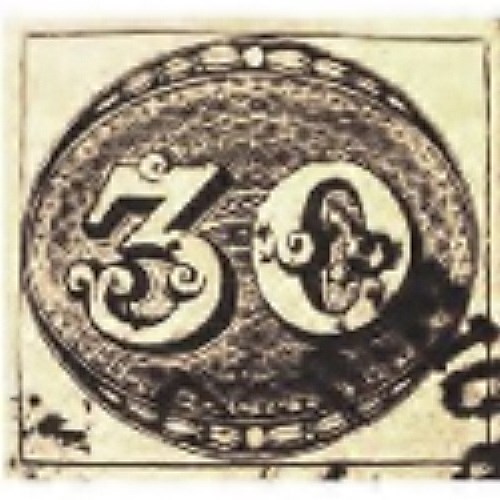
The first issue of Brazil - the Bullseye, so nicknamed from the
design's resemblance - comes
fourth chronologically in order of issue of adhesive postage stamps.
First, in 1840, came the
Penny Black and two-pence Blue of Great Britain; in 1842 came the
New York Dispatch; and,
in March 1843, came the Fours and Sixes of Zurich. The Bullseyes
first appeared on August 1,
1843.
In conception, however, the Bullseyes are entitled to rank second
only to the British issue. It
was on November 30, 1841 that the Brazilian Government was
authorized by Law No. 43 to
create stamps. That law came about through the efforts of J.D.
Sturtz, a German who had
been a Brazilian consul to Prussia. Enlisting the aid of a British
charge d'affaires in Brazil, he
urged the adoption of prepayment by means of stamps, following the
innovation in Britain.
Eventually emerging from carefully preserved, if musty, official
records was the prime fact that,
in 1841, the Brazilian customs authorities seized an engraving
machine from one Pedro
Ludwig, confiscated it and used it in the service of the mint. On
Christmas Eve 1842 a
transferring machine and accessories were bought by the Mint from
one Eduardo Lemerick.
Production of the plates involved engraving a flat die with figures
and background - a different
die for each value; 30, 60, and 90 reis. The printing of the
Bullseyes ceased at the end of
1843. Continued sale of the stock on hand was authorized on August
22, 1844, but use after
1850 is scarcely known. The numbers of Bullseyes calculated to have
been issued are 30 reis
- 856,617; 60 reis - 1,335,865; 90 reis - 341,125. Those figures do
not include the remainders
on hand which were burnt at the Mint on March 30, 1846.
Of the finds of Bullseyes the most important has been a vertical
strip of three; the upper two
stamps are the 30 reis value and the lowest is a 60 reis, with a
dividing line which separated
the different values on the plate. Formerly in the collection of
Charles Lathrop Pack, the strip is
known as the 'Pack Strip'. In March 1963 at auction by Stanley
Gibbons the pack strip realized
£8,250. Auctioned again by Stanley Gibbons in February 1969, the
Pack Strip realized
£11,500. It was sold in the Robert Siegel auction at Ameripex '86'
on May 25th for $275,000.
Another, but defective multiple of different values se tenant is
known.
A complete pane of eighteen of the 90 reis was found in Brazil about
1898. Among other finds,
the most noteworthy is a unique complete sheet of sixty of the 60
reis from the plate which was
ready on July 11, 1843. At Stanley Gibbons' auction in Frankfurt on
18 May 1978, the sheet
realized $82,381. A 30 reis interpane block of four realized
$168,000 (£97,308) at the
Habsburg-Feldman auction in Zurich November 18, 1989 of the Amazon
Collection which had
been assembled over half a century. Colonel Napier had theorized
correctly about the
existence of the third plate which was proven by the later discovery
of this block. The collection
had earned the Grand Prix of the Court of Honour at London 1980.
----------------------------------------------------------------------------------
Rodolfo / rtvstamps
Resource: Encyclopaedia of Rare and Famous Stamps by L. N. Williams.
Back to American
Philately
/
Exchange with Collectors from Mexico


|


